Our Political Efforts
Our Core Programs and Collaborative Efforts
Focused initiatives to strengthen governance, dialogue, and partnerships across Lebanon.
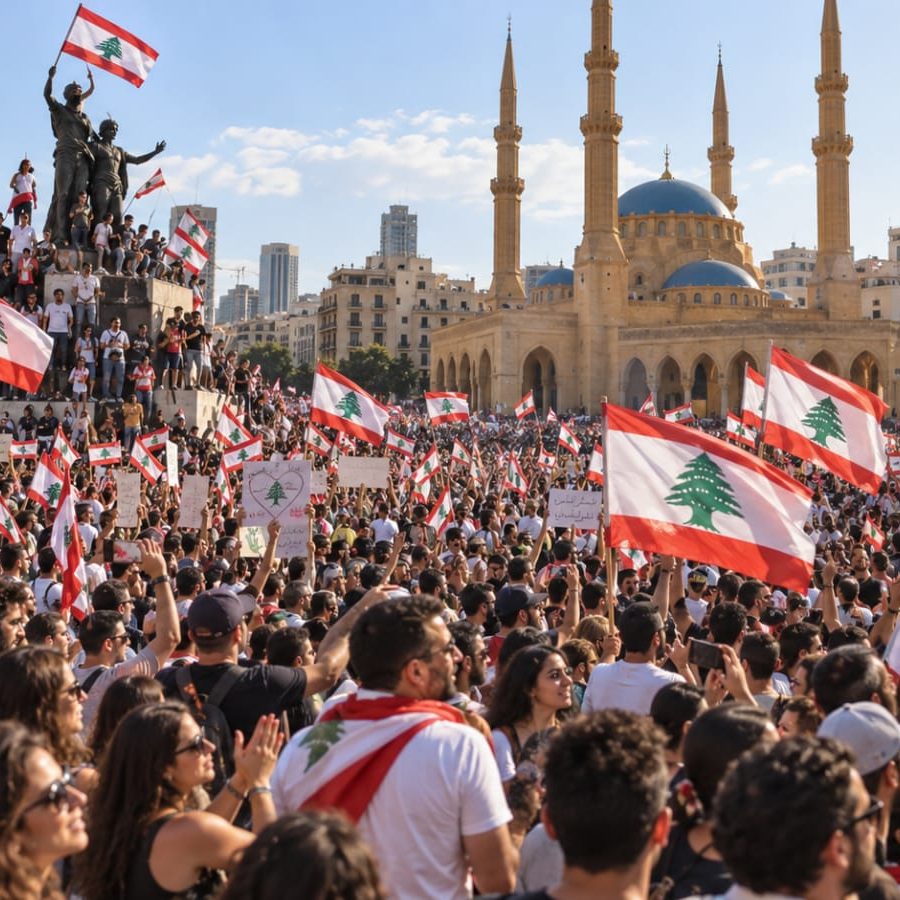
A NATIONAL VISION FOR PEACE
FROM THE LOGIC OF WAR TO THE LOGIC OF THE STATE
A Lebanese Vision for Peace, Sovereignty, and National Unity
To the Lebanese people,
and to Lebanon’s friends around the world,
Lebanon cannot build its future by excluding anyone, marginalizing any community, or allowing one Lebanese group to prevail over another.
This country was built on diversity, and it must remain a homeland for all its citizens.
Christians, Shiites, Sunnis, Druze, Alawites, and every Lebanese citizen must feel that they have an equal place in the state, and that their rights, dignity, and political representation do not depend on the strength of their sect, party, or political leader.
Political disagreement with a party or organization must never become hostility toward an entire religious community.
Likewise, the debate over Hezbollah’s weapons must never become a justification for politically or socially marginalizing Lebanese Shiites.
Nor should Alawites, Sunnis, Christians, Druze, or any other Lebanese community be marginalized.
Lebanon cannot be built by weakening its communities.
Lebanon can only be built through a strong state that protects everyone.
At the same time, no genuine state can exist if the authority to make decisions of war and peace is divided between the state and armed political organizations.
Our position is therefore clear:
The ultimate objective must be one Lebanese state, one Lebanese Army, one set of legitimate national institutions, and one authority over weapons and the decisions of war and peace: the Lebanese state.
But this objective cannot be achieved through another civil conflict, through exclusion, or through force alone.
Military force does not always resolve the political and security conditions that give rise to armed movements.
When a population feels threatened, or believes that its territory is exposed to attack, armed mobilization can increase and the language of resistance can become stronger.
For this reason, it is not enough simply to say: we want weapons outside the state to disappear.
We must also ask:
How do we build a capable state?
How do we protect Lebanon’s borders?
How do we provide the Lebanese Army with the full capacity to defend the country and its people?
And how do we remove the political and security conditions that are used to justify the continued presence of weapons outside state authority?
We are in 2026.
The world has changed.
Gunpowder cannot remain the only language between peoples and states.
Dialogue, negotiation, and diplomacy are not signs of weakness.
In many cases, they are more difficult than war, but they are the only path toward lasting solutions.
If Israel seeks genuine security along its northern border, if Lebanon seeks full sovereignty over its territory and an end to violations of its borders, and if the Lebanese people want to end the cycle of war, then a clear negotiating process led by the Lebanese state is necessary.
What is needed is a clear and reciprocal security framework:
Lebanese territory must not be used as a source of threat against any neighboring country.
In return, Lebanese territory and the Lebanese people must not be subjected to aggression, occupation, or violations.
Each state must protect its own population from within its own borders.
And the Lebanese state must become the sole authority responsible for protecting Lebanon, its borders, and its sovereignty.
However, the issue of weapons in Lebanon is not purely an internal Lebanese issue.
It is connected to a long history of regional conflict, border disputes, Israel, Iran, and the broader political and security balance of the Middle East.
Addressing this issue therefore requires two parallel tracks.
The first is an internal Lebanese track.
We call for a serious national dialogue, led by and involving Lebanon’s constitutional institutions, bringing together all political parties, national forces, and Lebanese communities without exception.
All must sit around one table.
Not so that one party can defeat another.
Not so that one sect can impose its will on another.
But so that we can seriously discuss Lebanon’s future:
A national defense strategy.
The exclusive authority of the state over weapons.
Border security.
Strengthening the Lebanese Army and state institutions.
Reconstruction of the South.
The economy.
Fair political representation.
And Lebanon’s foreign relations.
Every party that sits at this table must place Lebanon’s national interest above electoral interests, the interests of citizens above the interests of political leaders, and the nation above any external regional alignment.
War, fear, and the blood of civilians must never become tools for sectarian mobilization or electoral gain.
The Lebanese people are not fuel for political agendas.
The second track is regional and international.
Lebanon needs serious international support, facilitation, and guarantees, particularly from the United States and other countries capable of influencing the parties to the conflict.
But we do not seek foreign guardianship over Lebanon.
We seek international assistance in reaching a solution that respects Lebanese sovereignty and prevents another war.
Negotiations must be led by the Lebanese state.
The final decision must remain Lebanese.
The international community can serve as a mediator, facilitator, and guarantor of any agreement that is reached.
We are not seeking peace at Lebanon’s expense.
Nor are we seeking an agreement that forces one side to surrender.
We seek a peace that protects rights, guarantees security, and removes the arguments used by all sides to justify continued conflict.
If attacks end, borders are secured, the state and the Lebanese Army become stronger, and all Lebanese communities feel that their state is capable of protecting them, then the transition toward exclusive state authority over weapons can become part of building the state rather than the outcome of another internal war.
This is the principle we believe in:
No community should be marginalized.
No weapons outside the authority of the state in the Lebanon we seek to build.
No aggression against Lebanon.
No use of Lebanese territory to threaten others.
No war for political gain.
And no Lebanese blood shed for regional interests.
Lebanon has experienced enough war.
Our people have paid a price far greater than any small nation should be asked to bear.
It is time to give the state a chance.
It is time to give dialogue a chance.
And it is time for politics to become a means of protecting human life, rather than sending people to war.
Our goal is not to take power away from one community and hand it to another.
Our goal is to place the strength of all Lebanese citizens within the Lebanese state.
Our goal is not for one side to defeat another.
Our goal is for Lebanon to succeed.
Lebanon First.
One State.
One People.
Equal Citizenship.
One Army.
One National Decision.
And a path of dialogue and peace that protects the dignity, sovereignty, and future of all Lebanese citizens.
Accountable Governance
Strong institutions, transparent leadership, and equal accountability under the law are essential to rebuilding trust in the Lebanese state.